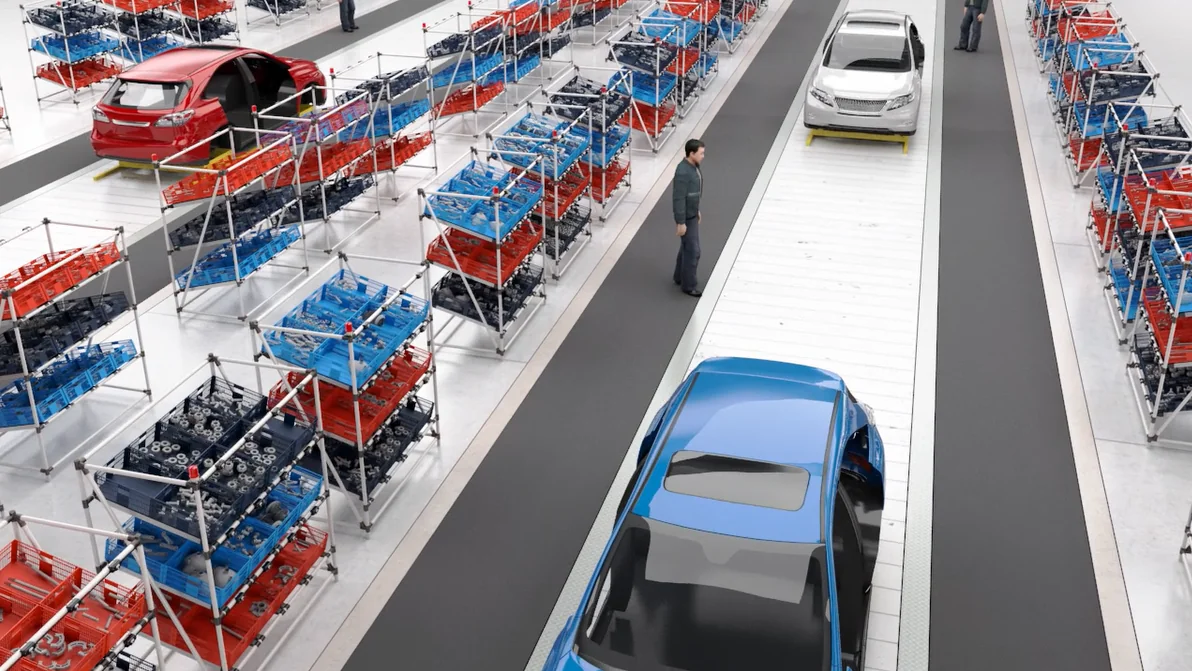
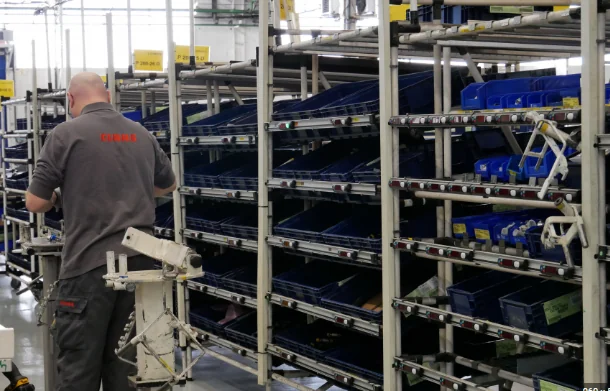
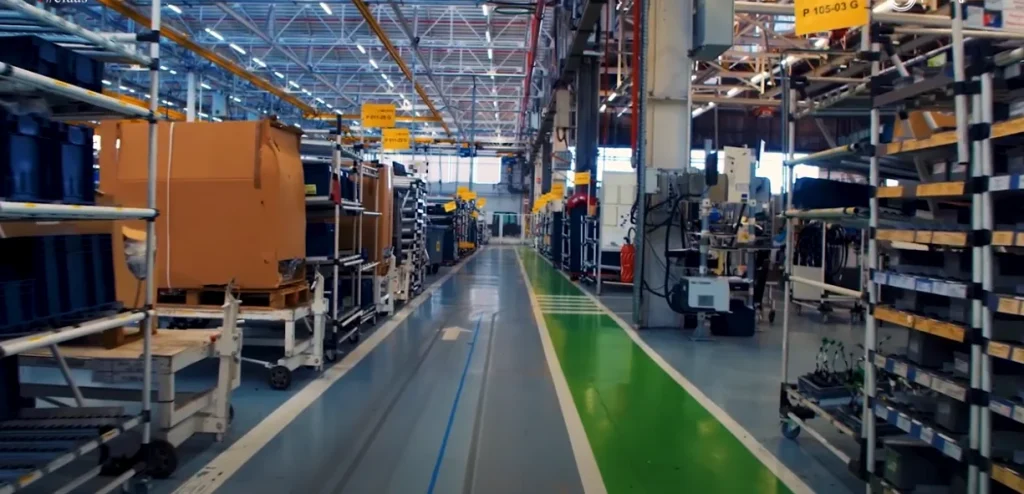
Assemble to Light is a step-by-step visual assembly guidance system, installed at industrial assembly workstations and lines to ensure the exact sequence of every operation. It tells the operator which components and tools to use, improving assembly quality and preventing errors and rework.
Advantages of Assemble to Light
The Assemble to Light solution boosts efficiency on industrial assembly lines, ensuring an error-free process fully aligned with Lean Manufacturing and quality at source.
1
Higher assembly quality (First-Time-Quality), eliminating omission and component-mix errors
2
Drastic reduction in rework and non-quality costs by validating every step in real time
3
Higher productivity and less cognitive fatigue, with no need to consult paper drawings or manuals
4
Shorter training time, bringing new operators up to speed without losing pace
How Does the Assemble to Light Solution Work?
At the assembly station, light indicators are integrated into every component compartment, together with a screen showing digital step-by-step instructions. The system lights up the exact part to be fitted in the correct sequence. After placing the component, the operator confirms with a push button, a photoelectric barrier or validation from a connected torque tool. The system records process traceability before authorising the next step.
Who Is Assemble to Light For?
This solution is aimed at industrial plants and mass or highly customised assembly lines that demand maximum accuracy and zero defects in their assembly processes.
It is essential for demanding sectors such as automotive, household appliances, capital goods and aerospace, where guaranteeing the exact assembly sequence is vital to avoid quality failures, warranty claims and costly unplanned stoppages.
How Long Does It Take to Implement Assemble to Light?
Implementing Assemble to Light is an agile process that is usually completed within 2 to 4 weeks, without interrupting normal production activity.
Analysis and Design Phase (Week 1): Study of assembly processes, workstation architecture and definition of the guidance flow.
Hardware Installation and Connectivity (Weeks 2-3): Installation of indicators, screens and Poka-Yoke sensors, integrated with the plant software.
Testing and Training (Week 4): Sequence validation, calibration and fast operator training.
How does Assemble to Light prevent errors if the wrong components are fitted?
The system combines indicator lights with Poka-Yoke validation devices (such as photoelectric sensors or gates). If the operator tries to take a part from an unlit location or makes an omission, the system raises an audible/visual alert and prevents the sequence from advancing until the fault is corrected.
Can Assemble to Light be used at workstations with a high variety of models?
Yes. By connecting to the plant’s MES/ERP, Assemble to Light reads the barcode or RFID tag of the manufacturing order and automatically adapts the light sequence and on-screen instructions to the specific product variant entering the workstation.
What impact does Assemble to Light have on the learning curve of new operators?
By replacing paper manuals with intuitive step-by-step visual guidance, the training time for a new operator is reduced by up to 80%, making it possible to reach optimal production pace with zero errors from the first shift.
Get in touch
Tell us how you currently manage order picking or manufacturing processes and we will help you find the Pick To Light solution that best suits your company’s needs.

 EN